
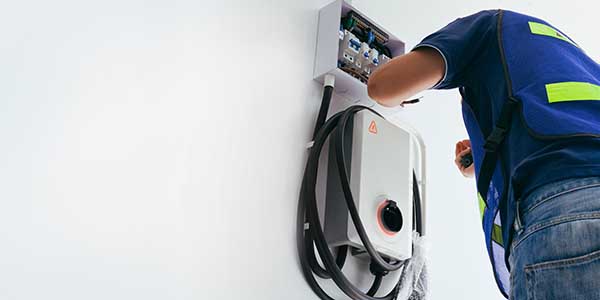
What to Know Before Installing a Home EV Charger in Greater Cincinnati
EV Ownership Is Up — So Are Charging Questions
More driveways around Loveland and Greater Cincinnati have an electric or plug-in hybrid parked in them than ever before. Once the novelty of public charging wears off, almost every owner asks the same thing: how do I just plug in at home overnight and wake up to a full battery?
The short answer is that it's very doable — but a safe, code-compliant home charger is more than running an extension cord to the garage. It comes down to the right charging level, whether your panel can handle the load, and a clean install that meets National Electrical Code. Here's what we walk every customer through before we quote a job.
Get a Free Estimate!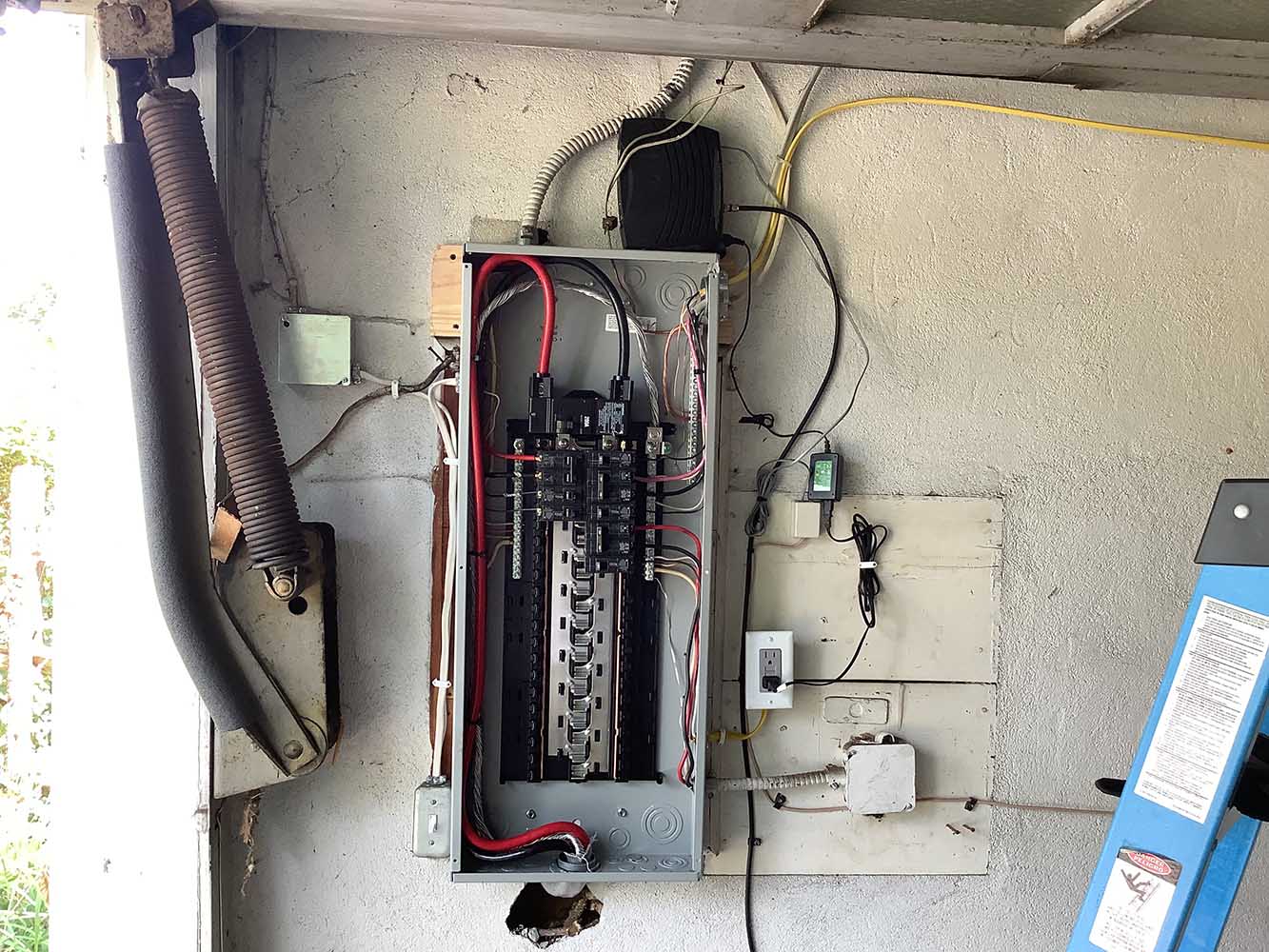
Level 1 vs. Level 2: Which Charger Fits Your Day?
Level 1 charging uses the cord that comes with the car and a standard 120-volt outlet. It's the slowest option, usually adding only a few miles of range per hour — fine for a plug-in hybrid or a short daily commute, but frustrating if you drive a lot. Level 2 charging runs on a 240-volt circuit, the same kind of power a clothes dryer or range uses, and it typically refills a battery many times faster. For most households, Level 2 is what turns "I have to plan around charging" into "I never think about it." That's why the large majority of the home installs we do are 240-volt, either a dedicated outlet or a hardwired charger.
"Install 220 in garage for EV/Hybrid. Excellent service by Ash! He was prompt, professional and kept the work site clean and tidy. Highly recommend."
See our profileA 240-volt circuit is the practical choice for daily drivers. We'll tell you honestly if Level 1 is enough for your situation — no upsell, just what makes sense for how you actually use the vehicle.
Does Your Electrical Panel Have Room?
A Level 2 charger is a meaningful new load, often calling for a 40- to 60-amp breaker depending on the unit. Before anything gets installed, the real question is whether your existing panel has both the open space and the spare capacity to carry it safely alongside everything else in the house. Older homes and panels that are already near full are the most common reason an EV project turns into a bigger conversation. When that happens, a service or panel upgrade is usually the fix — and it's far better to find that out during a free estimate than after equipment is on the wall. We do a proper load assessment up front so the price you get reflects the actual work.
"Ash and crew did a great job upgrading my electrical service, along with all permitting. Got several price quotes and his was very reasonable. AFW Electrical is now my go to for all future electrical work!"
See our profile
Your EV Charging Questions, Organized
A Plug-In Outlet or a Hardwired Charger?
A 240-volt outlet (commonly a NEMA 14-50) lets you use a portable charger and unplug it if you move. A hardwired charger is fixed in place and is often the better choice for higher-amperage units or outdoor installs. Both are valid — the right pick depends on the charger you bought and where it's going.
We're happy to install either, and we'll flag which one your specific charger manufacturer recommends so you don't void a warranty.
How Many Amps Do You Actually Need?
Charger amperage decides how fast you refill and how big a circuit we run. Many home units are set up for 40 or 48 amps, which covers the overnight needs of nearly every driver. Going bigger isn't always better — it can mean a heavier circuit and, in some homes, a panel upgrade.
We size the circuit to your charger and your driving, not to the largest number on the box.
Do You Need a Permit?
In most jurisdictions around Greater Cincinnati, a dedicated EV charger circuit requires a permit and an inspection. That's a good thing — it's how you know the work is safe and done to code. As a licensed contractor, we handle the permitting and meet the inspector so you don't have to chase paperwork.
You can see how we approach this work on our EV charger installation page.
Where Should the Charger Go?
Placement is about more than reaching the car. We look at the distance from your panel, the parking spot the connector cable can comfortably reach, and whether the unit is rated for an indoor garage or an exterior wall. A few feet in the right direction can make daily use easier and keep the install cost down.
If you're planning a second vehicle later, tell us — it changes where we'd put things today.
What Drives the Price?
The biggest cost factors are the distance from your panel to the charger, whether walls or finished space need to be opened up, the charger's amperage, and whether your panel has room as-is. A short run in an unfinished garage near the panel is straightforward; a long run across a finished home is more involved.
Because of that range, we give honest upfront pricing after we see the space — no guessing over the phone, and no surprise add-ons later.
Setting Yourself Up for Later
Even if you only have one EV today, it's worth thinking a step ahead. Leaving a little capacity in the panel, choosing a slightly higher-rated circuit, or running conduit you can reuse can save real money when a second vehicle or a battery upgrade shows up down the road.
We'll lay out the trade-offs so you can decide how much to plan for now versus later.
How an AFW EV Charger Install Goes
Straightforward, code-compliant, and done under Ash's direct supervision from the first call to final charge.
1. Free Estimate
You reach out, we ask a few questions about your vehicle and charger, and we schedule a visit.
2. Load Assessment
We check your panel's capacity and open space, then map the best route to the charger location.
3. Permit & Plan
We pull the required permit and confirm the circuit size for your specific charger.
4. Clean Install
We run the dedicated circuit and mount the unit, keeping the work area tidy and safe around kids and pets.
5. Inspection
The work is inspected to confirm it meets and exceeds National Electrical Code.
6. Charge at Home
You plug in overnight and skip the public charger lines for good.
Why Cincinnati Homeowners Choose AFW
Owner-Operated
Every job is completed under the direct supervision of Ashley Ward, an electrician with over a decade of experience.
Code-Compliant Work
Installs meet and exceed National Electrical Code standards, with all required permitting handled for you.
Honest Upfront Pricing
You get a fair, clear price after we see the work — no hidden charges and no surprise add-ons.
Clean, Respectful Jobsite
We treat your home with care and a safety-first approach around children and pets, and we clean up when we're done.
Free Estimates
We assess the project and quote it at no cost, so you can make a decision with real numbers in hand.
4.8-Star Rated
Homeowners across the communities we serve consistently rate AFW Electric 4.8 stars on Google.
Home EV Charger FAQs
A straightforward Level 2 install near the panel is often done in a single visit. If your panel needs an upgrade first or the circuit runs a long distance, it can take longer. We give you a realistic timeline with your estimate.
Not always. It depends on your panel's spare capacity and open breaker space. We run a load assessment during the estimate so you know up front whether an upgrade is part of the job.
In most cases, yes. We install both outlet-style and hardwired chargers from the major brands and will confirm your unit's requirements before we wire anything.
For a dedicated 240-volt circuit, most local jurisdictions require a permit and inspection. We handle the permitting as part of the job so the install is documented and safe.
Yes, as long as the charger is rated for outdoor use. We make sure the unit and the wiring method are appropriate for the location so it holds up to the weather.
We serve Loveland and the surrounding Greater Cincinnati communities, including Mason, Milford, Montgomery, Blue Ash, Hyde Park, and more. If you're nearby, reach out and we'll let you know.
Related Services
EV Charger Installation
Dedicated Level 2 charger and outlet installs for homes across the Cincinnati area.
Learn MoreService & Panel Upgrades
Add capacity for an EV charger and the rest of your home with a code-compliant panel upgrade.
Learn MoreWiring & Installation
New circuits and dedicated wiring for chargers, additions, and the upgrades your home needs.
Learn MoreAreas We Serve
Let's Get Your EV Charger Installed
Tell us about your vehicle and where you park, and we'll handle the rest — load assessment, permitting, and a clean, code-compliant install. Free estimates, honest pricing, and work done right under Ash's direct supervision.
Request Your Estimate
Reach out and tell us a little about your EV and your home.
We Assess & Quote
We check your panel and the install location, then give you a fair, upfront price.
Charge in Your Garage
We install it to code so you can plug in overnight and forget about it.