
Repair or replace your electrical panel? How to tell in a Loveland-area home
On this page · 9 sections
A lot of the calls we get around Loveland, Milford, and Mason start the same way: a breaker keeps tripping, the lights dim when the dryer kicks on, or the panel cover feels warm, and the homeowner wants to know one thing. Do I need a whole new panel, or can you just fix what's wrong? It's a fair question, and the honest answer is that it depends on what the panel is actually doing, not on how old it looks.
Most panel problems fall into one of two camps. Either one part has failed — a worn breaker, a loose connection, a single overloaded circuit — or the panel itself has run out of room, out of capacity, or out of safe years. The first is a repair. The second is a replacement or a service upgrade. Here's how we sort one from the other when we're standing in front of your panel.
The short answer
Bottom Line Up Front
If the trouble is one breaker or one circuit and the panel is otherwise clean, dry, and has room to spare, repair it. If problems show up across the house, the panel is full or a fuse box, there's heat or corrosion inside, or you're adding an EV charger, hot tub, or remodel — replace or upgrade it.
A repair is the right call more often than people expect, and a good electrician should tell you so. But a panel that's out of room, out of capacity, or showing damage isn't something to keep patching. The trick is knowing which kind of problem you have before you spend money on the wrong fix.
(troubleshooting calls)
by that $75 fee
or service upgrade
The rest of this post is the four questions behind that answer, and a decision table at the end that gets most homeowners pointed the right way in a couple of minutes.
Question 1: Is the problem one circuit or the whole panel?
Start by noticing where the trouble shows up. If it's always the same breaker — the one for the kitchen, the garage, or the bathroom with the space heater — that points at a single circuit. It might be overloaded, it might have a loose wire, or the breaker itself may be worn out. Those are repairs, and they're exactly what our troubleshooting and diagnostic visits are for.
The picture changes when the problems are spread around. Lights flicker in rooms on different circuits, several breakers trip at random, or everything dims at once when a big appliance starts. That points upstream of any one circuit — at the main connections, the bus inside the panel, or the service feeding the house. If your lights are the main symptom, our post on why lights flicker covers the usual causes.
Repair vs. replace at a glance
This is the comparison we'd walk you through at your panel. Each row is a real decision factor; the highlighted cell is the column that usually wins when that factor is the one driving your decision.
| Factor | Lean Repair | Lean Replace |
|---|---|---|
| Where the problem shows up | One breaker, one circuit | Several circuits or the whole house |
| Type of panel | Breaker panel in good shape | Fuse box |
| Open space | Empty slots available | Full, with breakers doubled up |
| Heat or burning smell | None | Warm cover, scorching, melted parts |
| Inside the box | Clean and dry | Rust, moisture, or corrosion |
| Plans for the house | Nothing big coming | EV charger, hot tub, or remodel ahead |
| Cost to find out | $75 covers trip and first hour | Free estimate |
Fees are AFW Electric's own: $75 for trip and diagnostic time on troubleshooting calls, and free estimates on new projects. Your panel likely fits more than one row — the right call is whichever column wins the most of your rows.
Before the visit, jot down which breaker tripped, what was running at the time, and roughly when it happened. Three or four notes like that can turn an open-ended hunt into a quick find, and it's a big part of why most troubleshooting calls wrap up inside the first hour.
Question 2: What kind of panel is it, and is there room left?
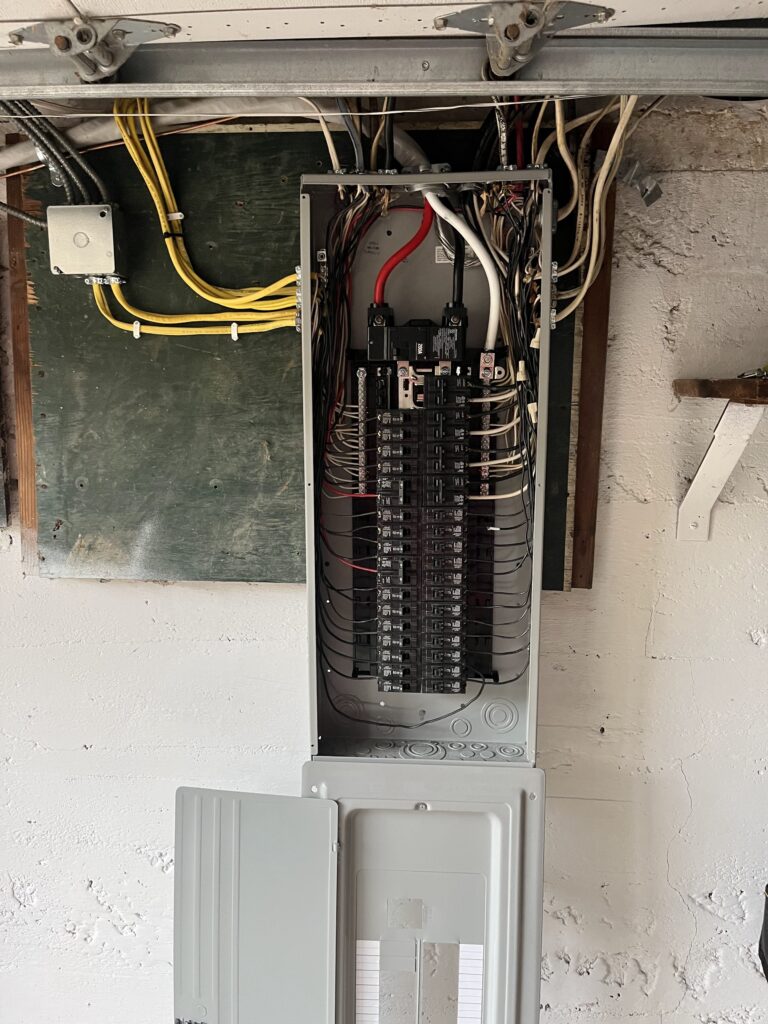
Open the panel door (just the door — leave the cover on) and look. A breaker panel with clear labels, open slots, and breakers that sit snug is usually a panel worth keeping. A fuse box, a panel where every slot is full and breakers have been doubled up to squeeze in one more circuit, or labels that no longer match the house tell a different story. Those panels have been stretched past what they were built for.
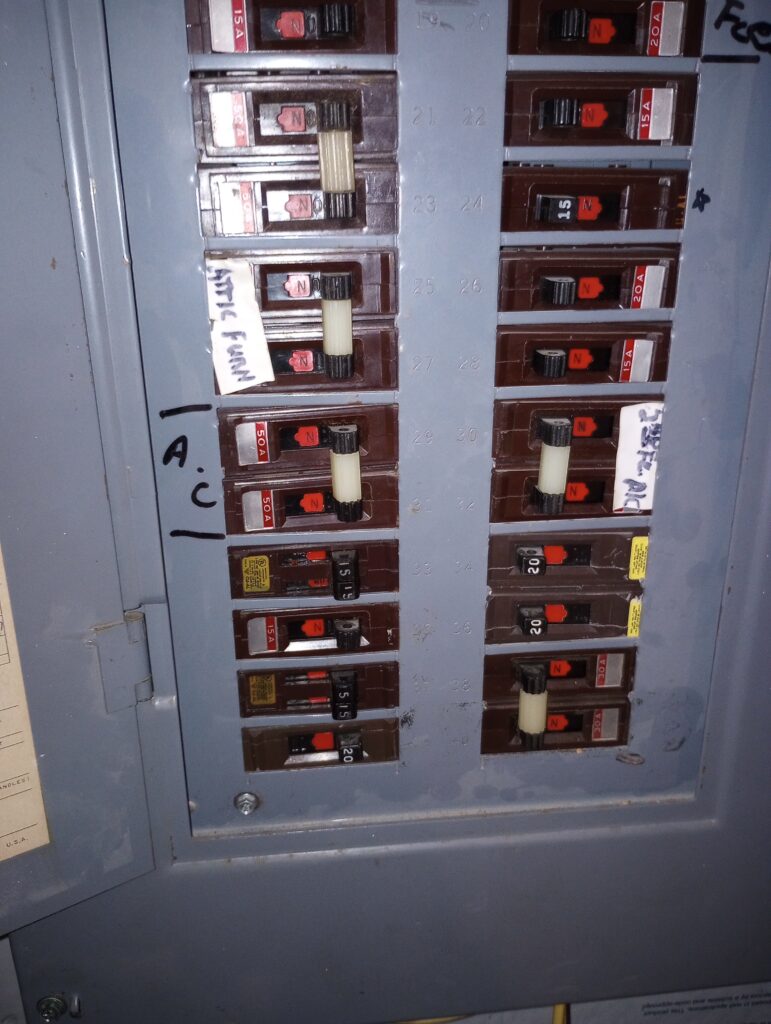
If you're not sure what you're looking at, our guide to understanding your electrical panel walks through the parts. And if you're shopping for an older house, it's worth reading the electrical red flags to watch for before you make an offer.
Question 3: Are you about to add something big?
This is the question that flips more panels from "repair" to "replace" than any other. A panel that handles today's house just fine may not have the capacity or the open space for an EV charger, a hot tub or pool, or a kitchen remodel or rewiring project. If one of those is on your list for the next few years, it makes sense to plan the panel and the project together instead of paying for a fix now and an upgrade later.
We run the numbers on your actual panel and your actual plans during the estimate. For the background on how that load math works, see whether your panel can handle a hot tub or EV charger.
Signs it's a repair
The panel is sound and the problem is contained. Fix it and move on.
What we look for
- The same single breaker trips, and the rest of the house runs normally.
- The panel has open slots and every breaker sits firmly in place.
- The inside of the box is clean and dry, with no rust or water staining.
- No warmth, buzzing, or burning smell anywhere near the panel.
Signs it's a replacement
The panel is the problem, not one part of it. Patching buys time, not a fix.
What changes the answer
- Lights flicker or breakers trip on several different circuits around the house.
- Every slot is full and breakers have been doubled up to add circuits.
- Scorch marks, melted plastic, corrosion, or a cover that feels warm.
- An EV charger, hot tub, or remodel is planned and the panel has no room for it.
What it costs to find out
Here's the part people worry about most, so we'll keep it plain. Finding out what's wrong and finding out what a new panel would cost are two different visits, and they're priced differently. Same panel, two honest paths — this is what each one looks like.
Troubleshooting the problem
Same panel · one breaker or circuit acting up- Trip to your home Part of the $75 fee
- First hour of diagnostic time Included in the $75
- Simple fix, like a loose wire reconnected Covered
- Additional parts or materials Priced separately
- Labor beyond the troubleshooting Priced separately
Replacing or upgrading the panel
Same panel · replaced or upgraded- On-site visit, measurements, and options $0 (free estimate)
- Price range given on the spot Included
- Written quote with the total price Within a day or two
- Materials Usually no deposit needed
- Add-ons after the fact Only if discussed and confirmed
When a breaker keeps tripping, it's tempting to swap it for a larger one so it stops. Don't, and don't let anyone else do it either. A breaker is sized to protect the wire behind it, and a bigger one lets that wire run hotter than it should. The trip is the warning, not the problem. Find out why it's tripping before anything in the panel changes.
Question 4: Do you see heat, scorching, or moisture?
Some signs take the decision out of your hands. A burning smell near the panel, a cover that's warm to the touch, scorch marks, melted plastic, buzzing, or rust and water staining inside the box are not things to wait on. Stop using the affected circuits and call. Sometimes the damage is limited to one breaker and its connection; sometimes it has spread far enough that the safe answer is a new panel.
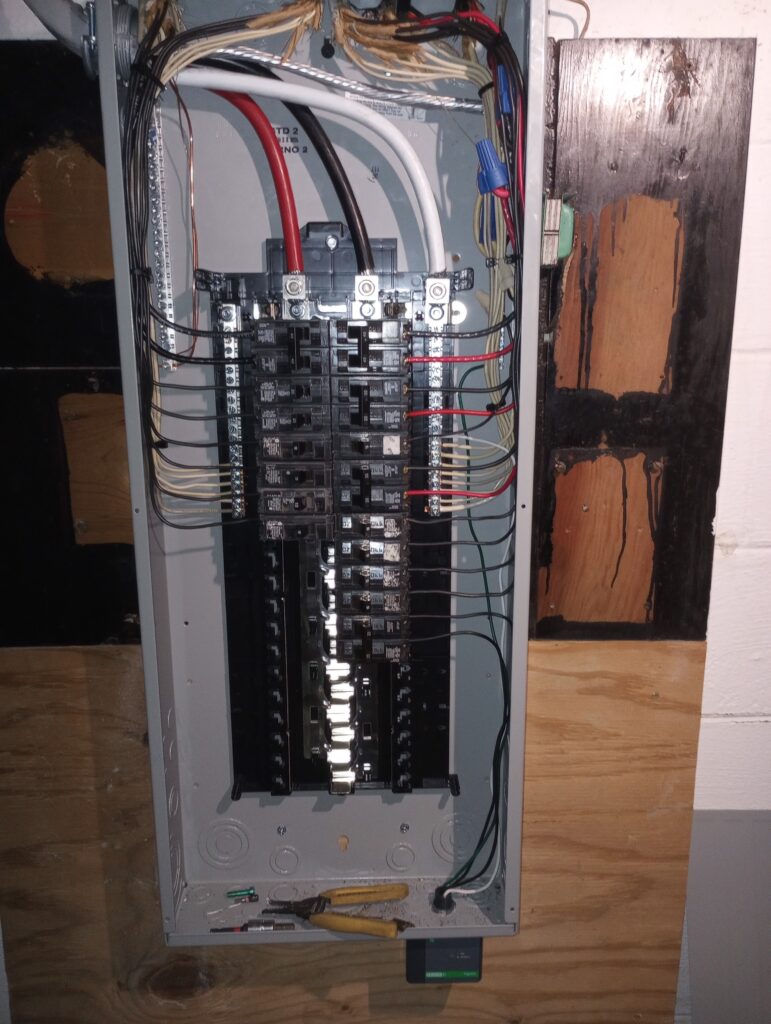
When a replacement is the answer, the panels we install on upgrades are Square D and Cutler Hammer, and every install goes in to and beyond current NEC standards — level, neat, and labeled so you can find the right breaker without guessing. Then we walk you through it before we leave.
“Whatever we quote you, we will stand by. The price quoted for the job is the price you will pay.”— AFW Electric, LLC
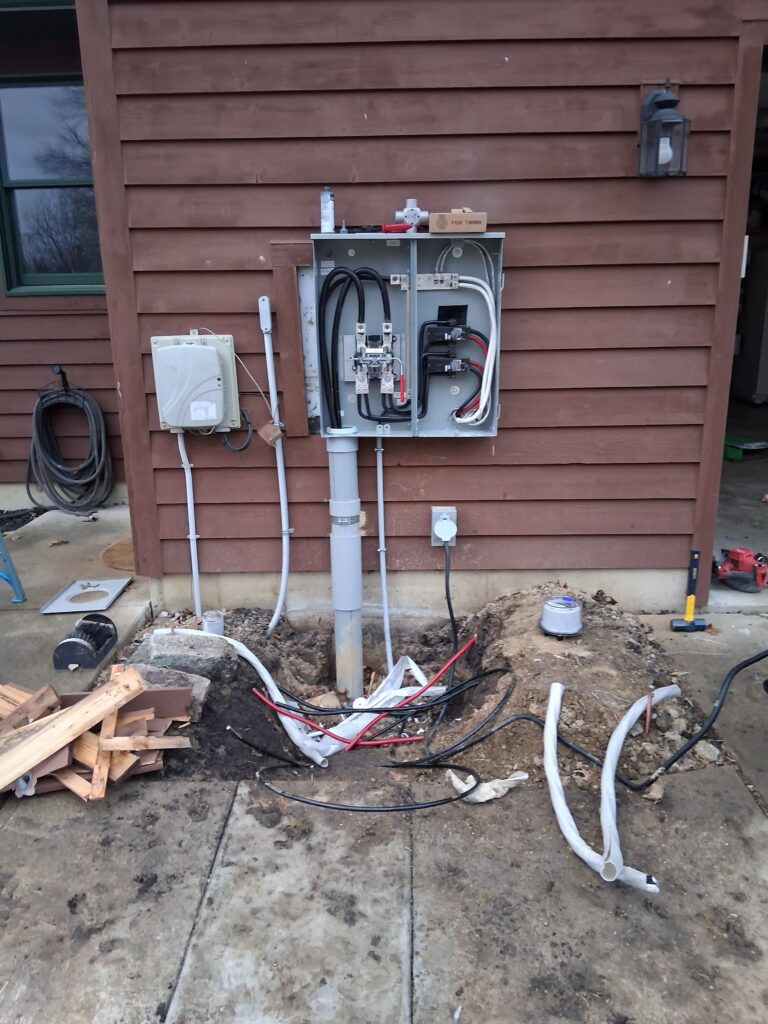
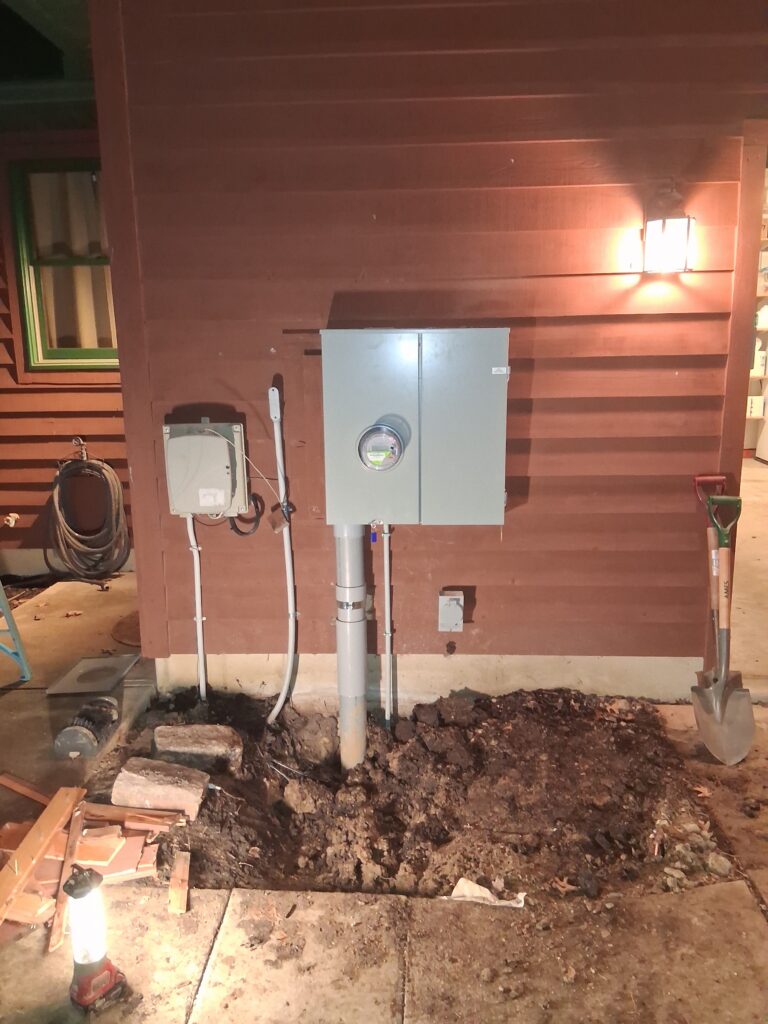
Here's what a service upgrade looks like on the outside of the house. Drag the divider to compare the meter base and panel opened up mid-install with the same setup finished and closed.
The decision table
If you only use one part of this post, use this. Read down the left column to your situation, then see which side has the stronger answer. Most panels fit more than one row — the right pick is whichever column wins the most of your rows.
| If your panel… | Repair | Replace / Upgrade |
|---|---|---|
| Trips one breaker on one circuit | Yes | Overkill |
| Has trouble on several circuits | Stopgap only | Yes, usually |
| Is a fuse box | Buys time | Yes |
| Has no open slots left | If nothing new is coming | Yes |
| Shows scorching, melting, or a warm cover | Not safe to patch | Yes |
| Has rust or moisture inside | No | Yes |
| Needs to power an EV charger or hot tub | If capacity allows | Plan it together |
| Is clean, dry, and working fine | Leave it be | Premature |
The bottom line
Plenty of panels that worry homeowners just need one honest repair — a worn breaker replaced, a loose connection tightened, a circuit rebalanced. The panels that need replacing usually make it clear once you ask the four questions: the problems are spread across the house, the panel is full or outdated, a big addition is coming, or there's heat or moisture damage. When those line up, replacing once beats patching. For more on what a new panel brings with it, read the benefits of upgrading your service.
If you can't tell which side your panel is on, that's what we're here for. We'll come out, look at the panel, tell you honestly whether it's a repair or a replacement, and give you a price range on the spot — with boot covers on, the work area kept safe for kids and pets, and the place left cleaner than we found it. Request your free estimate or call 513-884-1014.